Cast iron from the 1950s and 60s has less room to spare
Interior corrosion narrows the pipe over the decades, so debris that would pass through a new PVC line without issue is more likely to catch and build up here.
24/7 dispatch, based in North Miami
A stubborn kitchen sink and a household-wide backup call for different tools entirely, so the technician spends the first few minutes figuring out what is actually stuck before reaching for anything.
What is the difference between a fixture-level clog and a main-line blockage?
A fixture-level clog sits inside the trap or the short branch pipe feeding one sink, tub or toilet, and it only affects that one fixture, which is usually the easier and faster of the two to clear.
A main-line blockage sits further along, in the larger pipe that carries waste from every fixture in the house out to the street connection, and it tends to announce itself by hitting more than one drain at once, often starting with whichever fixture sits lowest.
North Miami’s older cast iron drain lines complicate this a little, since decades of interior scale narrow the usable width of the pipe, so a clog that would be minor in a newer line can back up faster here.
A household on one shared lateral, common in the city’s duplexes, can also see a backup that started on the neighboring unit’s side rather than its own, which changes where the actual fix needs to happen.
What the pattern usually tells you
A little detail about where and how it is happening changes what gets brought to the door.
Grease and food debris build up close to that fixture and rarely travel far before catching.
Two fixtures sharing a branch pipe often show up together like this before either fully blocks.
Air pushed back through a partially blocked line, a sign worth mentioning even if the toilet itself still flushes fine.
A repeat clog at one location is rarely bad luck twice; something at that spot is catching debris on purpose.
The strongest single sign that the blockage is downstream in the main line rather than at any one fixture.
Why this looks different in North Miami
The age and layout of the pipe change what a normal clog looks like.
Interior corrosion narrows the pipe over the decades, so debris that would pass through a new PVC line without issue is more likely to catch and build up here.
Where one drain line serves both halves of a duplex, a clog’s true source is sometimes on the other side of that line, which is worth checking before assuming it starts at either unit alone.
Frequently asked
It is not recommended on older cast iron, since the chemicals can accelerate corrosion, and it does nothing for a blockage further down the main line anyway.
Whether more than one fixture is affected, and which one sits lowest in the house, points toward the main line before any tool is even brought out.
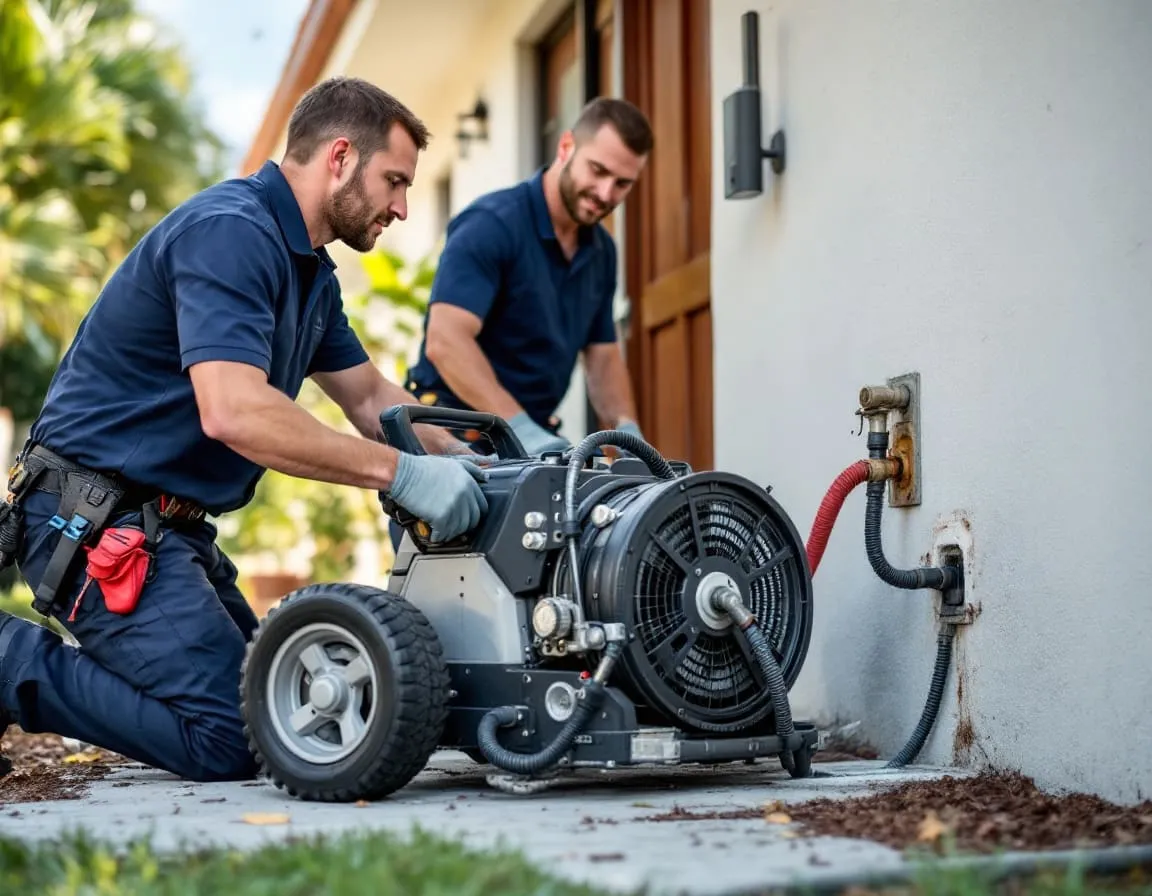
The cable or jetting pressure used is matched to the line’s actual condition, and a pipe already showing wear gets a gentler approach than a newer one would need.
That pattern usually means something structural at that point, a root, a bad joint or built-up scale, and it is worth a camera look rather than clearing the same spot a third time.
Same dispatch line
The same board that answers every other call takes this one too, any hour of the day.
