A high water table near the canals
Homes east toward North Miami’s canal-side neighborhoods sit on ground that gives a sewer line less fall to work with, which can make a partial blockage turn into a backup faster.
24/7 dispatch, based in North Miami
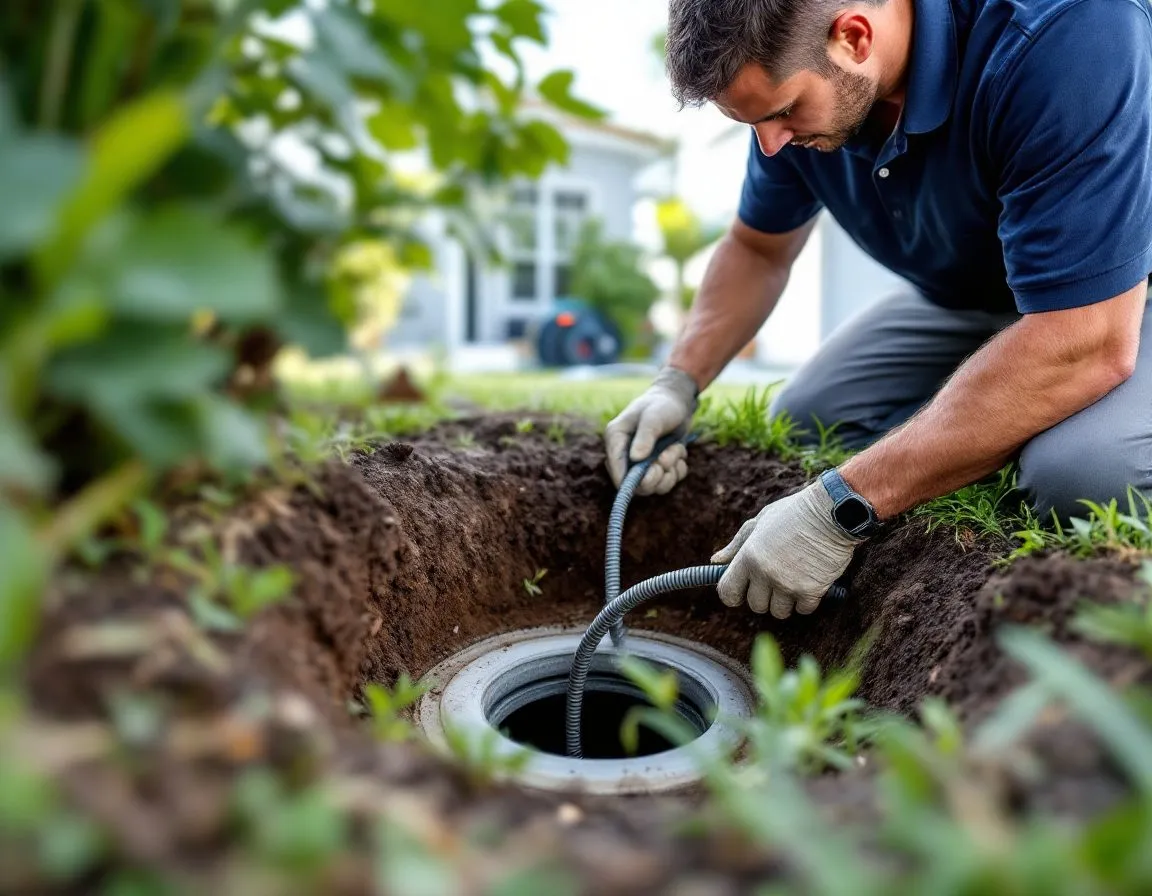
A main line problem usually shows up as more than one drain acting up at once, and the camera decides whether it needs a spot repair, a trenchless liner, or a traditional dig, not a guess from the yard.
What actually causes a main sewer line to fail in North Miami?
A main sewer line typically fails from one of three causes: root intrusion at an aging joint, structural cracking in old cast iron or clay pipe, or a section that has settled and lost its slope, and each one calls for a different fix.
Homes closer to North Miami’s canal-side neighborhoods sit on ground with a naturally high water table, which gives the line less usable fall to work with and makes a partial blockage more likely to turn into a full backup.
A camera pushed the full length of the line pinpoints the failure and its cause directly, and that finding is what determines whether a localized spot repair, a trenchless liner, or an open-trench replacement makes sense.
Mature trees on older North Miami lots are a common source of root intrusion, since roots travel toward any moisture, including a hairline leak at an old pipe joint.
What a main line problem looks like
A single fixture problem and a main line problem look different once you know what to watch for.
When every low fixture acts up at the same time, the problem sits downstream of all of them, in the shared line.
A gurgle right as another fixture empties usually means the shared line downstream is restricted, not the toilet itself.
A structural cause, rather than a simple clog, usually needs a camera look rather than clearing it again.
A leaking section underground can surface as a wet or oddly lush spot well before anything backs up indoors.
What makes this different here
Ground conditions and housing age both shape how this job actually goes.
Homes east toward North Miami’s canal-side neighborhoods sit on ground that gives a sewer line less fall to work with, which can make a partial blockage turn into a backup faster.
Older North Miami lots often carry decades-old trees and established landscaping that an open trench would disturb; a trenchless liner can avoid that where the line’s condition allows it.
A main line repair or replacement in Miami-Dade requires a permit, and a repair near the property’s connection point may need coordination with the county’s side of the line.
Frequently asked
Not always; a trenchless liner or spot repair can often address the problem without an open trench, depending on what the camera shows.
The camera footage makes the distinction visually; root intrusion, a structural crack and a settled section each look different on screen.
A shared lateral situation is assessed as part of the diagnosis, since a repair on one side can affect flow on the other.
Clearing a blockage without addressing its structural cause usually means it returns; the camera findings make that distinction clear before deciding.
No separate number
24/7 dispatch, told what is wrong and what fixing it involves before anything starts.
