24/7 dispatch, based in North Miami

Water heater replacement in North Miami

A tank nearing the end of its life gets a straight answer on whether repair still makes sense, and a replacement, when it is the right call, is sized to the home rather than swapped for whatever was already there.

  • Replacement recommended only after repair is ruled out
  • Sized correctly for the home or unit
  • Permitted and installed to current code

At what point is a water heater better replaced than repaired again?

A tank-style water heater is generally expected to last eight to twelve years, and past that range, a failing part is often a sign the tank itself is aging rather than an isolated issue worth repairing on its own.

Rust-colored water from the hot tap, a tank that is visibly leaking at the base, or a unit making persistent rumbling noise from sediment buildup are each signs worth a straight assessment rather than another repair.

A North Miami condo unit typically runs a smaller, closet-mounted water heater than a single-family home’s, and sizing a replacement correctly for that space, rather than defaulting to whatever fits, affects how well it actually keeps up.

A repair is recommended first whenever it genuinely makes sense; replacement gets suggested only once repair stops being the more sensible option.

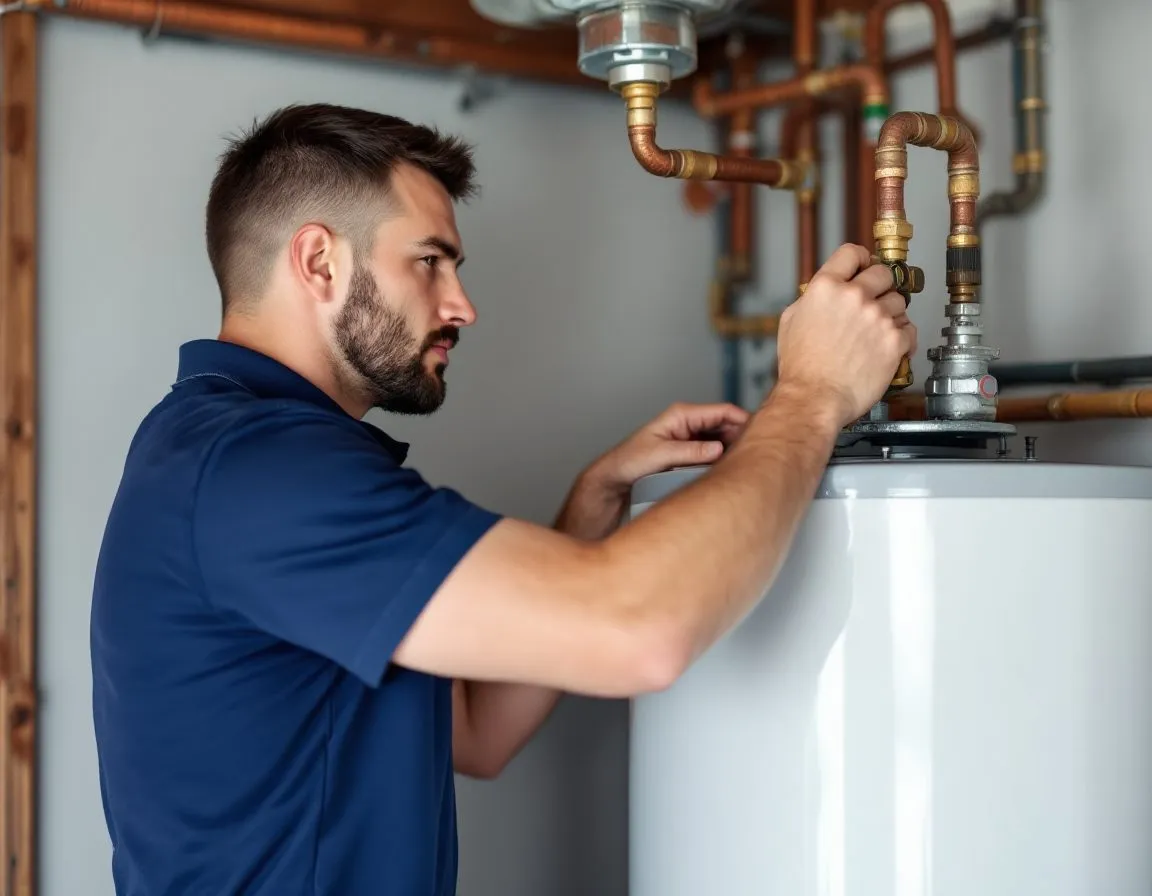
Signs replacement is the right call

What usually means repair is no longer enough

A few of these together are a stronger signal than any one alone.

  • Rust-colored hot water, even briefly

    Points to the steel tank rusting internally, rather than a supply line or fixture elsewhere in the house.

  • Visible water pooling at the base of the tank

    A tank leaking at the seams or fittings is usually past the point where a repair makes sense.

  • The unit is past the ten to twelve year mark

    Past that range, a new failure is often the first of several rather than an isolated one.

  • Rumbling or popping noises during heating

    Sediment buildup hardening at the bottom of the tank, a sign of age more than a fixable defect.

Sizing it right for North Miami housing

Why the same unit does not fit every home here

A single-family house, a duplex unit and a mid-rise condo do not need the same water heater.

Mid-rise condo units run smaller tanks

A closet-mounted water heater in a North Miami mid-rise condo is typically sized smaller than a house’s, and getting that sizing right, rather than defaulting to whatever fits the space, affects recovery time noticeably.

Miami-Dade permitting applies to replacement

A water heater replacement in Miami-Dade requires a permit and inspection, which matters for both safety and for any future sale of the property.

Hurricane season affects recovery for electric units

An outage during hurricane season means an electric tank stops heating until power returns; a household’s hot water planning is worth factoring into the choice of unit.

Frequently asked

About replacing a water heater

Will you try to repair it first?

Yes, replacement is only suggested once a repair genuinely no longer makes sense for the unit’s age and condition.

Do I need a bigger tank than the one I have now?

Sizing is based on the household and the space, not on matching what was already installed, which is not always the right size to begin with.

Is a permit really required for a straightforward swap?

Yes, in Miami-Dade a water heater replacement requires a permit and inspection regardless of how routine the swap looks.

What about a tankless unit instead of a tank?

That is a fair option to discuss, weighed honestly against the space, the household’s usage and the cost difference, not assumed to be the better choice by default.

Same-day, same board

Water heater replacement is a same-day call away

No separate line for water heater replacement: one dispatch number, answered any hour.

(786) 894-3082