Galvanized steel was the standard supply material
Homes built during North Miami’s 1950s-60s boom almost universally started with galvanized steel supply lines, and that material’s useful life has, for most of them, already been reached or passed.
24/7 dispatch, based in North Miami
Repeated pinhole leaks on the same galvanized supply line are usually the moment a repair stops making sense, and a repipe gets planned around which sections are actually failing rather than swapped as a reflex.
When does it make more sense to repipe than to keep repairing?
One pinhole leak on an old galvanized line is a repair; a second or third leak on that same run inside a couple of years points to a whole section reaching a similar stage of internal corrosion, even where the rest has not failed yet.
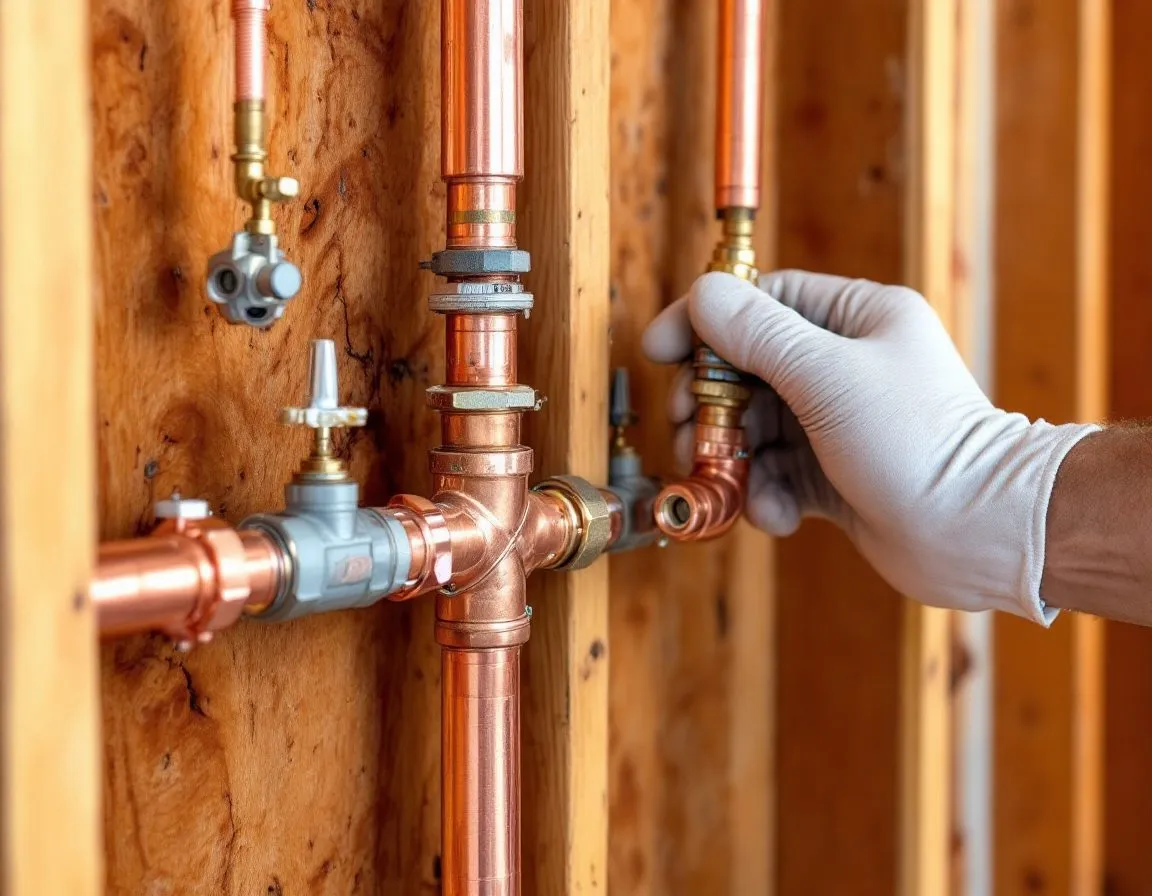
A repipe replaces the supply lines feeding fixtures throughout the home, typically in PEX or copper, and is planned around which sections are original and which have already been updated at some point, rather than assumed to be all-or-nothing.
North Miami’s 1950s and 60s housing stock overwhelmingly started with galvanized steel supply lines, a material with a well-understood, finite service life, so a home that has never had any of its supply piping updated is a realistic repiping candidate on age alone.
A duplex adds a wrinkle worth planning for early: whether both units share one supply run from the meter, or each has its own separate line, changes how the work gets scoped.
Signs pointing toward a repipe
A pattern across the home, not a single incident, is usually what tips this decision.
A repeated leak on the same era of pipe usually means nearby sections are at a similar stage.
A whole-line corrosion pattern rather than an isolated fixture issue.
Scale narrowing an aging supply line from the inside, felt everywhere rather than at one tap.
Repiping during an already-open wall avoids paying for that access twice down the road.
Why North Miami homes are common candidates
A repipe decision here is shaped by exactly when the home was built.
Homes built during North Miami’s 1950s-60s boom almost universally started with galvanized steel supply lines, and that material’s useful life has, for most of them, already been reached or passed.
Some North Miami duplexes run one shared supply line from the meter, others run two fully separate lines; confirming which applies is an early step in scoping the work honestly.
A repipe in Miami-Dade requires a permit, with the new lines pressure-tested and inspected before any wall or slab access is closed back up.
Frequently asked
Not necessarily; a section that is clearly original and failing can sometimes be addressed on its own, though whole-home repiping is often more efficient once several areas need it.
Both are valid options with different tradeoffs; the choice is discussed honestly against the home’s layout and the household’s own preference, not defaulted to one automatically.
Access points are planned to be as limited as reasonably possible, and water is typically only off for the portion of the day the active section is being worked on.
Not automatically, since supply and drain lines are different systems and different materials, though a home this age is often worth having both assessed together.
Same dispatch line
The same board that answers every other call takes this one too, any hour of the day.
